The valleys, the rain and the travelling beekeepers of Yemen

Yemeni honey is made by geography as much as by flowers: limestone canyons in Hadramout, cool terraces in Usimate, dry plateaus in Shabwah, and hives carried each year between the autumn Sidr and the spring Sumur bloom.

Plate I.A wadi in Hadramout from the air. The trees keep to the valley floor, where the flood water runs.

Four honey countries

Height above the sea, the week the flash rains arrive and how thickly the trees stand give each region a harvest that tastes of that place.

Governorate
Hadramout Governorate
Height
Low altitude, arid canyon floor (~700–1,000 m)
Harvest
October – December (main autumn Sidr bloom)

Wadi Do'an (Hadramout)

Wadi Do'an is Yemen's most famous canyon beekeeping corridor. Unirrigated wild Sidr trees root deep into silt along cliffside mudbrick villages, fed solely by intermittent wadi floods.

Dense amber body, warm butterscotch-caramel finish, slow pour.

Governorate
Northern / Central Highlands
Height
High altitude (~1,800–2,400 m)
Harvest
Late September – November

Usimate (Highland Terraces)

In contrast to the desert canyons of Hadramout, Usimate's elevation and greener rainfall patterns yield a distinct highland harvest character often packaged with raw honeycomb.

Brighter floral lift, lighter golden-amber hue, crisp herbal aroma.

Governorate
Shabwah Governorate
Height
Low to mid altitude, dry plateau
Harvest
October – December

Shabwah Governorate

Once a crossroads along the ancient incense trade route, Shabwah's wide dry wadis sustain scattered wild Sidr stands harvested by migratory beekeepers tracking local rainfall.

Deep mahogany-amber, woody resin warmth, bold lingering richness.

Governorate
Western Highlands, Southern Plains & Socotra Archipelago
Height
Coastal plains to >2,500 m peaks
Harvest
March – July (Sumur/Marai), Autumn (Sidr/island)

Haraz, Abyan & Socotra

Yemen's honey culture spans far beyond Sidr alone—including spring Acacia (Sumur and Salam) in Abyan/Tehamah and rare endemic harvests from Socotra Island.

Ranging from dark molasses-like Sumur to bitter-medicinal Socotri wildflower.
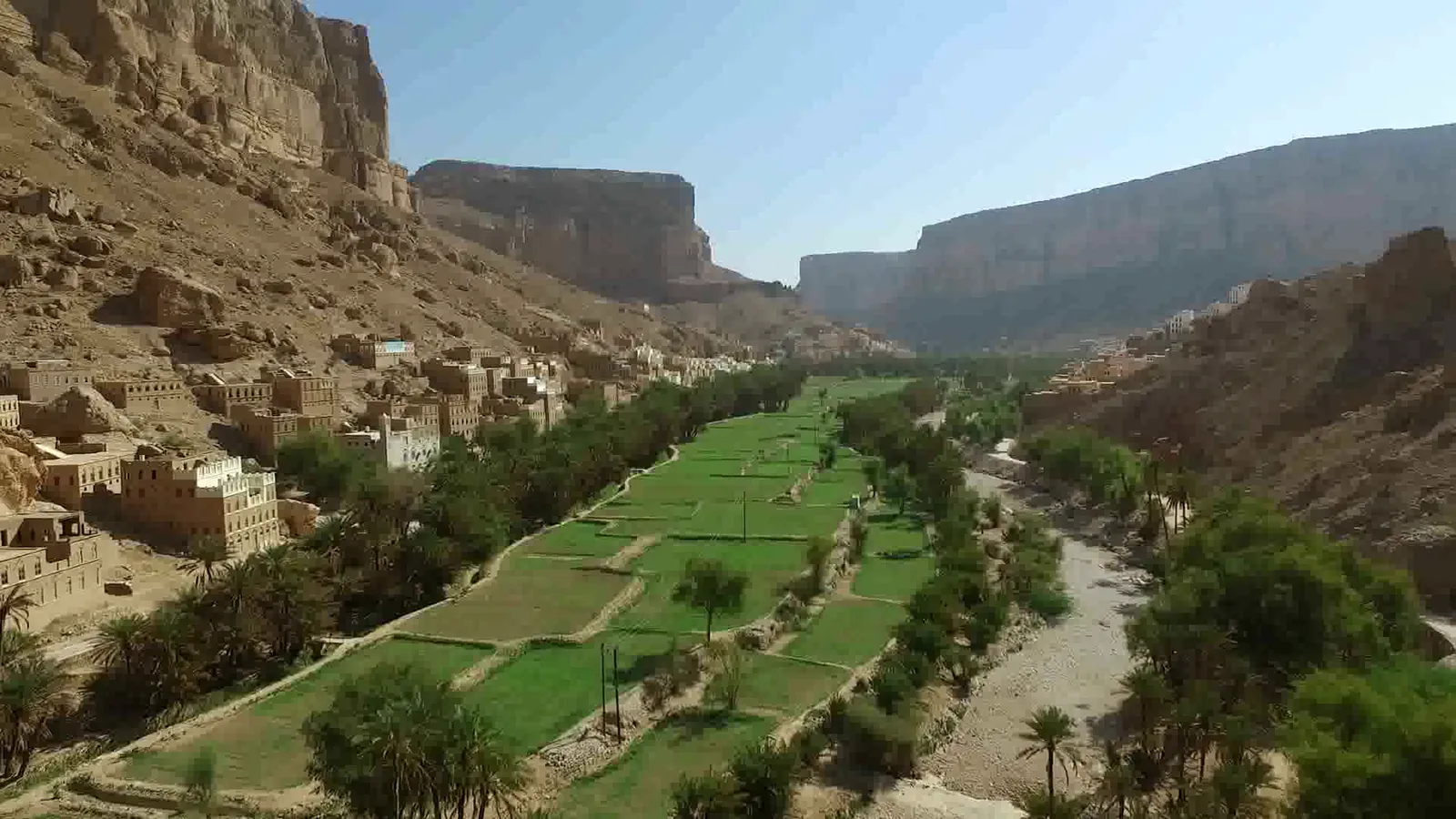
Green irrigated terraces and date palms along a wadi floor under sandstone cliffs
Plate II.Terraced plots and palms on the wadi floor after the flood season.
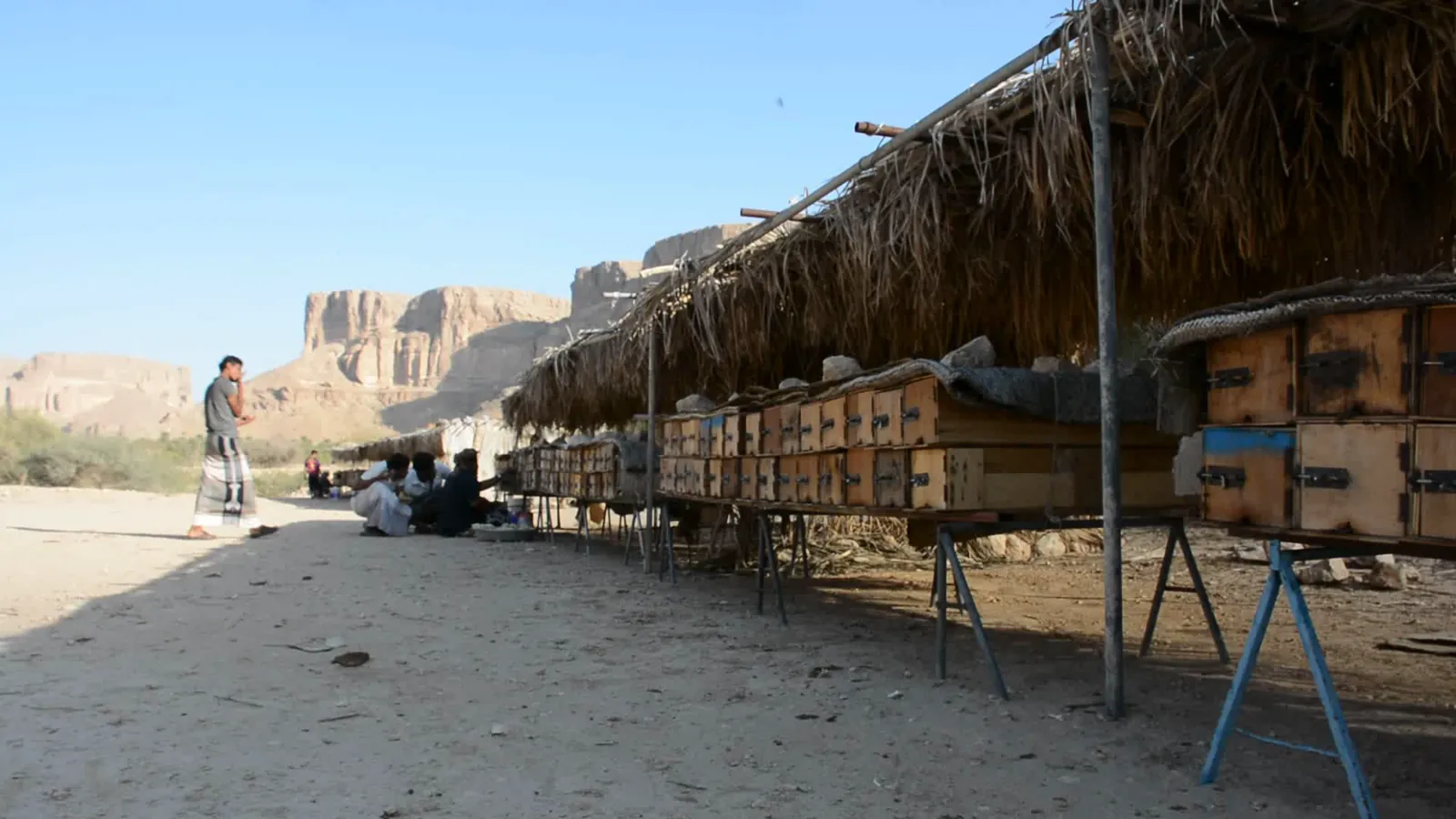
A long row of wooden box hives under a palm-thatch shade, with cliffs behind
Plate III.An apiary under palm thatch. The shade matters more than the box.
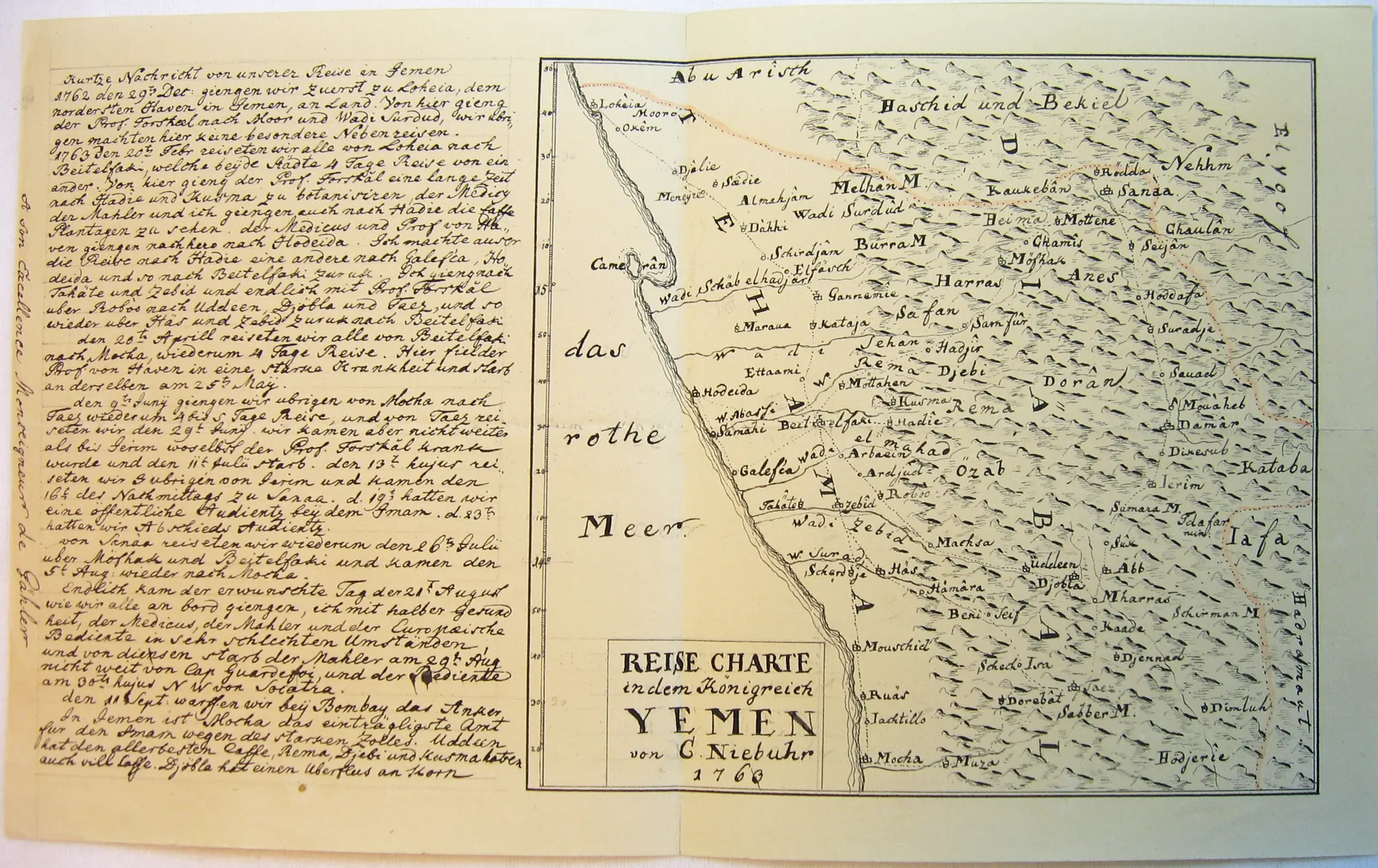
Hand-drawn eighteenth-century map of Yemen with a page of manuscript notes beside it
Plate IV.A map of Yemen after Carsten Niebuhr. Public domain, via Wikimedia Commons.

Mapped late, walked for centuries

Carsten Niebuhr, surveyor of the Danish Arabia expedition, reached Yemen at the end of 1762 and drew the country's western roads from his own measurements. The honey wadis of Hadramout lay far to the east of his route.

The beekeepers needed no chart. Their routes between bloom and shelter were handed down by practice, valley by valley.

Yemeni Floral & Harvest Calendar

Filter Yemen's annual nomadic apiculture cycle across Sidr, Sumur, and Marai seasons.

JanuaryMigration & Hive Prep

Late winter colony inspection; hives rest or shift toward warmer coastal acacia stands.

Regions: Hadramout, Shabwah
FebruaryMigration & Hive Prep

Beekeepers transport hollow-log hives ahead of early spring Acacia buds.

Regions: Tehamah, Abyan
MarchSumur (Acacia)

Early Sumur (Acacia tortilis) nectar flow begins following spring moisture.

Regions: Abyan, Hadramout Plains
AprilSumur (Acacia)

Peak Sumur and Salam spring harvest; dark, mineral-rich acacia honeys extracted.

Regions: Abyan, Tehamah, Shabwah
MayMarai (Wildflower)

Highland wildflower (Marai) foraging builds colony strength after spring rains.

Regions: Haraz, Central Highlands
JuneMarai (Wildflower)

Summer polyfloral Marai extraction and hive splitting prior to autumn migration.

Regions: Highlands, Socotra
JulyMigration & Hive Prep

Monsoon (khareef) rains trigger Sidr tree foliage recovery in wadi beds.

Regions: Highlands, Wadi Basins
AugustMigration & Hive Prep

Nomadic migration back into Sidr canyons; colonies cleared of non-Sidr stores.

Regions: Wadi Do'an, Usimate, Shabwah
SeptemberSidr (Autumn)

First highland Sidr blossoms open; intense 4–6 week nectar flow begins.

Regions: Usimate, Wadi Do'an
OctoberSidr (Autumn)

Peak Sidr nectar foraging across Yemen's arid valleys and highland terraces.

Regions: Wadi Do'an, Shabwah, Usimate
NovemberSidr (Autumn)

Primary Sidr comb harvest: sealed frames cut and cold-strained without heat.

Regions: Wadi Do'an, Shabwah
DecemberSidr (Autumn)

Final late-season canyon extractions, settling in food-grade vessels, batch sealing.

Regions: Wadi Do'an, Shabwah
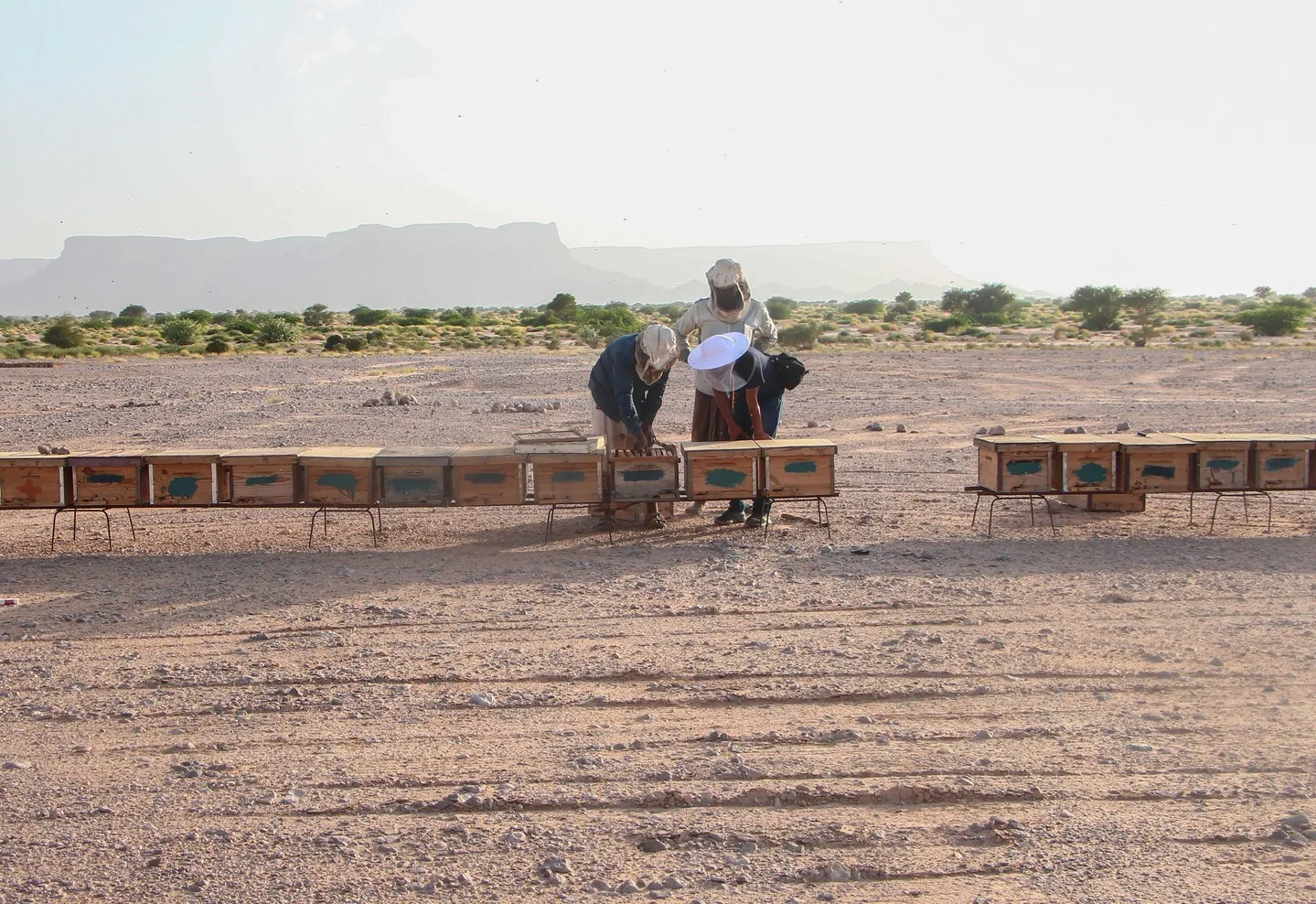
Two beekeepers working at a low line of hives on open ground, with a flat-topped mountain on the horizon
Plate V.Beekeepers at a hive line on the plateau. How the work is done